Chapter XIX: Building the Ownership Society

The last chapter--finally!

Distributism and the Current Crisis

Discussions of what to do about the current crisis commonly take the form of an argument between “socialism” and “capitalism.” However, such a discussion is flawed in both of its terms. Real socialism collapsed in 1989, and few would want to return to that horrific system. What is less well understood is that pure capitalism itself collapsed in 1929, never to rise again anywhere in the world. There are few citizens with any living memory of real capitalism, and the memories they have are generally unfavorable. Capitalism collapsed for the same reason as communism, a victim of its own internal contradictions that caused chronic instability. Workers found the system unacceptable, to be sure, but so did the capitalists themselves, and few were very sorry to see it go. Pure capitalism had proved itself toxic to both capital and labor, just as Belloc predicted it would in 1913.

The first task in reforming the system to understand the system that we have, the system that is in full failure, and understand apart from the ideological terms commonly used to describe it. The system that replaced capitalism was first a hyper-active Keynesianism, brought about by World War II and which lasted until the late 70's; Keynesianism itself was then replaced by a pure mercantilism, the system which combines private privilege with public power and which so incited the wrath of Adam Smith. It is this mercantilism which finds itself in the midst of a full-blown collapse. Both the Keynesianism which replaced capitalism, and the mercantilism which replaced Keynesianism, depend on massive government controls and subsidies which are no longer practicable or sustainable. Nor can we go back to the capitalism of the 1920's without reliving the instability of that turbulent period.

If capitalism is not a viable alternative, if it represents a system that no living man has seen, why then do the arguments in its favor carry such weight? I believe the reasons are mostly ideological. Capitalists are quite willing to trot out libertarian arguments when dealing with some regulation or tax that they find odious, but they are just as willing to put such arguments aside when they seek some privilege or subsidy from the government. In this way, the most well-meaning of the libertarians serve as the fellow-travelers and useful idiots of the mercantilists. And although I have a great deal of respect for the libertarian arguments in general, in practice these arguments do not function apart from well divided property, as the older, pre-Austrian libertarians realized.

However, it would be totally unjust to critique the libertarians if the distributists did not have something of their own to offer, and something more than mere platitudes or even principles. Something programmatic and concrete, and applicable to our actual situation is required. Distributists have an advantage in this regard, since, unlike capitalism or libertarianism, there are actual distributist systems on the ground and working (Chapter XVI) and we can examine them for practical lessons to apply to our own troubles.

Distributism and Government

Critics of distributism often charge that the theory is no more than a variety of socialism. This charge is odd for two reasons: One, socialism is the theory that there should be no private property, while distributism is the theory that property ought to be spread as broadly as possible; the two are precisely opposite. Two, the actual practice of distributism, in Mondragón and other places, is more “libertarian” than anything the libertarians have been able to accomplish. Nevertheless, the critique cannot be passed off lightly because the very term “distributism” conjures up the specter of “re-distribution,” the idea that some committee of bureaucrats will decide who will, and who will not, own property.

But in the main, distributism is not so much about what the government ought to do as about what it ought to stop doing. The claim of the distributist in this regard is not much different from the claim of the pure libertarian: It is government which fosters the accumulation of property into fewer and fewer hands. Indeed, without the aid and protection of government, the piles of capital could not have grown as high as they have. And the higher the piles of private capital grow, the thicker the walls of public power necessary to protect them. Big government and big capital go together, and this is a simple fact of our history, beyond all reasonable dispute.

That being said, there are clearly cases where government must, in fact, redistribute property. The case of Taiwan comes to mind, where the population was held in virtual slavery to a few landowners. The remarkable prosperity of that island is traceable to the decisive action of the land-to-the-tiller program, which made most of the sharecroppers into independent farmers. Those who would defend the landowners and the sanctity of property over the misery and poverty of the people corrupt the very notion of property. Property is a sacred right, but not an absolute one. Every proper right is known by its limits, and an absolute right is not a right at all, but the seedbed of tyranny. Property that depends on the slavery of others is certainly not legitimate property. And in such egregious cases, the government can indeed take egregious action.

And then there is the case of the entities deemed “too big to fail,” or more accurately, too big to succeed without generous drafts from the public purse. It is quite legitimate to break up such companies and to distribute them either to the local or regional banks or to the employees. The same principle applies to the failed industrial giants that require public life support. They can be broken up and turned over to the workers through the simple expedient of placing contractual obligations for pay and pensions on the same level as the contractual obligations to the bondholders. Then we can see if the workers can run these factories any better than the geniuses in Detroit. If the similar experience in Argentina is any guide, they might do very well indeed.

Finally, we can note that as long as capitalism endures, distributists may legitimately call on the power of government to limit its manifold excesses. For example, so long as there are monopolies, price-controls are a legitimate public response. Ideally, we would want to eliminate such monopolies that are not strictly necessary, but as long as the government protects monopolies, it is reasonable to ask for protection from monopolies.

All that being said, our main interest in dealing with government is to deal it out of the game. It is not that there would be no government—we are not anarchists—but compared to the size and scale of the current mercantilism, it would look a lot like “no government.” Still there are functions which are properly left to the community and these would be left in place. Anyone who objects to any government whatsoever as a form of socialism ought not to pull that socialist lever in their home, the one that makes their waste disappear in a whirlpool into the socialized sewage treatment plant.

I present a “distributist program” not because I think our future will unfold programmatically; rather, it is likely to be chaotic, even violent, as such transitions often are. But one must be hopeful and hope for peaceful change, and even have a plan to accomplish that change. Most of the proposals presented here have already been discussed in detail in the previous chapters. Here in the last chapter it is appropriate to bring them all together and summarize them. I will refer to the chapter where each was discussed more fully.

Building an ownership society involves both political and economic goals. The political goals are based on the principles of subsidiarity and solidarity (Chapter XIII). The economic goals are built on the principle that justice is intrinsic to economic order, and not some added extra or exogenous feature (Chapter VI).

You Say You Want a Devolution?

Devolution as a Fiscal Problem. Conservatives express great frustration with the egregious violations of the Constitution by the legislatures and the courts, violations which ensure that power gravitates to the federal government, while the states become mere bureaucratic subdivisions of the federal apparatus rather than partners in a political union. In response, they call for a devolution, a return of power to the states. Many historical, political, and philosophical reasons could be advanced for the centralization of power, but at base this turns out to be a fiscal problem. Power follows property, as Daniel Webster noted. The political equivalent is that power follows funding, that it gravitates towards that level of government that has the most money to spend. When the federal government acquired the power to tax incomes with the 16th Amendment in 1913—a source of funds with no natural limit—the rest of the constitution gradually became irrelevant.

The income tax makes the feds the most important source of funds, and hence the source of power. Local and state officials tend to kick problems “upstairs” to the largest funding source. Thus it comes as no surprise that a senator can run for vice-president on the claim that he “put 11,000 cops on the beat”; that is, that he did a job the city councilman should have done. But the councilman was happy to kick the job up to the senator, since the senator controlled the money. If you want the councilman and the senator to do their proper jobs, then you must cut the funding of the one and enhance the funding of the other. You cannot change the powers without changing the funding.

Income taxes are paid by capital and labor. Now, the more you tax a thing, the less you get of it. Yet labor and capital are things we want more of, not less. They should be taxed the least, if at all. Further, income taxes tend to degenerate into labor taxes, with the burdens shifted down the income scale, or forward to the next generation. The rich may claim that they pay the majority of incomes taxes, but this number is reached only by excluding the social insurance taxes, which only apply to the first $100,000 of income, and certainly don't include the taxes they shift onto their children and grandchildren.

In order to implement subsidiarity in government, we must also have subsidiarity in the funding of government. That is, funding must start at the local level and be dispersed upward, rather than the other way round. Further, we must tax that which has no economic value, that is, the tax should fall primarily on economic rent and externalities (Chapter XV). Economic rent can be confiscated with no negative economic consequences (except for the rentiers) and many positive ones. Externalities (the costs of a transaction charged to a third party not involved in the transaction, e.g., pollution) should be charged with the full cost of their mitigation. With any luck at all, the government will be sufficiently inefficient at mitigating externalities that businesses will prefer to perform the mitigation themselves and not pay the tax.

Economic rent is primarily embodied in ground rents (Chapter IX). Treated as a tax, ground rents are most efficiently collected at the local level, and indeed the bureaucracy to do so already exists. Obviously, there has to be national agreement on the methods used to value and assess ground rents and on the “split” between local, state, and the federal governments. But lower levels of government will then have an incentive to accept more responsibilities, rather than kick problems upstairs, because this justifies claiming a larger portion of the revenues, revenues which they themselves collect. Politically, the problem with a “ground rent tax” is that it sounds like a “property tax,” and that scares people. However, once it is understood that we are trading off the income tax for the ground tax, most people, I suspect, will see the advantage. They will have a tax easily predicted, easily collected, local, and all without the government prying into the details of their lives.

This would not entirely eliminate labor taxes, since there are still the social taxes. However, these taxes should be used solely for direct services to workers and their families, mainly unemployment and medical insurance, welfare, and old-age pensions. They should not be, as they are now, over-collected and used to subsidize the general fund, which requires that in a very few years the general fund will be required to subsidize the social funds, and this will prove to be impossible under the current system; the general fund is already broke and destined to get broke-er.

The social taxes are efficiently collected (at least in regard to wages) because they are a flat tax paid by businesses in behalf of the employees and which require no complex filings. The income limitations ought to be removed, and the tax made steeply progressive for the top 2% or 3% of incomes (since there is an implied economic rent in these cases), but otherwise, there is surprisingly little that needs to be done. The problem is a bit more complex when dealing with non-wage income, but I believe those problems can be solved efficiently.

Devolution and Deficits. A ground rent tax would collect about 20% of GDP on the best estimates. However, current government expenditures at all levels total closer to 35%. Hence there will be a shortfall under a ground rent scheme. Whether this is an advantage or not depends on whether the budget can be cut. We cannot use the “starve the beast” strategy that has characterized Republican Party policy. Such a strategy does not curtail the growth of government: it enables it. Cut off from any fiscal restraints whatever, it breeds a “deficits don't matter” mentality that divorces the budget from any fiscal reality. Further, tax cuts without spending cuts are not really tax cuts at all; they are tax shifting, mainly from the current to the future generation. Spending our children's money is both economically unsound and morally reprehensible.

Moreover, it is not just the problem of getting government to live within reduced means, there is also the problem of the enormous debt that must be paid off (or significantly reduced) if both sanity and subsidiarity are to be restored. The federal debt is, as I write this, $11.8 trillion and rising rapidly. The interest on that debt exceeds half a trillion dollars; after the defense budget, it is the largest expenditure of the federal government and will soon be the largest. These are monies that must be paid out before a single bullet is bought or a single bridge rebuilt. Thus, we seem to face intractable problems. On the one hand, we would like to reduce both taxes and the expenditures of government, and on the other we must pay a seemingly insurmountable debt from these reduced revenues. Nor is that all. Our infrastructure is aging and much of it needs to be rebuilt, at enormous expense. The freeway system, for example, was begun in the 1950's, and many parts are nearing the end of their useful life. And the same goes for many other parts of the infrastructure, such as levees and dams. This will put enormous pressures on any attempts to rein in the budget.

To add to the problems, we are about to face the retirement of the post-war baby boom generation, which will arrive like a fiscal tsunami on the Social Security and Medicare budgets. In the face of all these problems, it would seem that we need not lower taxes, but higher; not a devolution to the states, but an even more powerful central government empowered to tackle these enormous and growing problems. However, this would be to gorge on the medicine that made us sick in the first place, which can only make us sicker. How then should we confront these problems?

In regard to the federal budget, we argued in Chapter XIV, not only would it be relatively easy to cut one third or more from the general fund, it could be done without reducing (and usually enhancing) any essential services. I will not here rehearse that argument, but only mention that some of the measures are obvious, such as abolishing pointless departments like education and ending subsidies, recalling the military to our shores (do 700 overseas bases really enhance our security?) and shifting from taxes to fees wherever there is an easily identifiable group of users for a service.

Eliminating the Debt. But the largest line item, after the defense budget, is the interest on the debt. No real progress can be made if this debt is not eliminated, or at least substantially reduced. In thinking about the debt, one has to think about money itself. In Chapter VII we noted that the creation of money is the private monopoly of the banks. This money is created out of thin air, and represents no prior savings or production. Yet, it forms a claim against things that have been produced. In the case of government debt, the banks lend money they invent, but demand payment in the equivalent of real goods and services. Hence, the government must tax real goods and services and turn over the money to the creditors. But this will become increasingly less of a possibility in the near future.

About 41% of the debt ($4.3 trillion) is owned by agencies of the government, mainly the Social Security Trust Fund. This portion of the debt can simply be monetized over a ten- to fifteen-year period. That is, the government will print the money to pay off the debt to the trust funds. Some may be shocked by the suggestion that the government be allowed to simply print money into being, but this is certainly preferable to having the banks lend it into being. Will it be inflationary? It might be mildly so, but if done over ten to fifteen years, it will be no more than simply converting the current interest payments into principle and eliminating both.

There isn't much else that you can do with this debt. The only alternatives (other than just reneging on the commitment) are to raise taxes or increase borrowing. Up until now, the social security taxes have formed a vast subsidy to the general fund, with IOUs being placed in the fund. But in just a few years, the cash flow will go the other way: from the general to the trust funds; but the general fund does not have, and will not have, enough money to pay the trust fund. In order to pay off these IOUs, there would have to be a vast tax increase over and above the high social security taxes we now pay. Our children—and the economy—simply cannot tolerate that burden. Or we can simply borrow more money, but that is problematic, to say the least.

The next portion is the 29% owed to foreign governments, banks, and individuals. This portion of the debt could be monetized, but likely shouldn't be. My belief is that paying this debt should be the responsibility of the financial sector. A small tax, about 0.25%, on the transfer of financial instruments such as stocks, bonds, CDOs, CDSs, etc. should be levied and placed in a sinking fund to pay the interest and principle on these debts. Such a small tax would be sufficient to pay off the foreign debt over a term of five to ten years.

That leaves only the 31% of the debt held by American citizens and institutions. This portion of the debt could be partially monetized (as financial conditions dictate), partially paid off by the sinking fund, or simply left in place and allowed to shrink as a proportion of the economy. What is critical, however, is that the debt not be allowed to grow. And this requires abolishing the Fractional Reserve System, whereby the banks get to create money for nothing. This is the fiat money that is “lent” to the treasury. Its origin is thin air and a legal monopoly, a monopoly that must be abolished.

Monetary Reform. One of the greatest forces for the unjust accumulation of property is this fractional reserve banking system, which grants a monopoly privilege to a small group of people, namely the bankers and their allies. These private citizens have the power to create out of thin air nearly all the money in circulation. Such a system is intolerable on both moral and economic grounds, and must result in periodic credit crises, as greed and necessity moves bankers to create more money than the economy needs or can be reasonably “repaid.” That last word is in quotes because you can't “repay” what was never paid in the first place, to repay in real goods a “debt” that was only an accounting entry on the books of some bank.

I do not believe that an ownership society can be reconciled with such a money system. The creation of money is a public power, and the public ought to take it back. Coining money into being ought to be the sole authority of the federal government, or even the states that wish to do so (although this is not currently allowed in the Constitution).

There is no reason why the federal government should not create its own money and spend it into circulation for capital projects. Capital projects, in the main, create more wealth then they cost, hence there would be little inflationary effect. The Federal Government could also act as a banker to the states and cities to lend them money, at little or no interest, to finance their own capital needs. This would shift the power inherent in capital projects back to the states and cities. In any case, control of the money supply should not be in private hands; it is a public power, and the public should take it back.

Localizing the Economy

Industrial Reform. Political subsidiarity would mean little if the industrial system remained concentrated; it does no good to collect taxes locally if the production of goods, and therefore the production of taxable values, is not also widespread. In Chapter XVI, we noted the problems and inefficiencies of the current system, a system that is highly dependent on subsidies and externalized costs. Once these subsidies are removed, it is unlikely that the current production model could actually produce anything at a profit. Localized production will follow in the wake of the demise of the subsidies.

Indeed, the large corporations themselves have already opted for distributed production, divesting themselves of actual factories and seeking to retain centralized control through cheap transportation and legal control of the patents. The highly integrated, vertical model pioneered by Henry Ford has been in decline for some time; distributism is the order of the day in corporate America. Unfortunately, they have dispersed the factories around the world, rather than around the country. Nevertheless, this still plants the seeds of their own demise. One day, the workers in Vietnam making shoes for Nike will realize that they can ignore the patents, rip the swooshtika off the shoes, and sell them locally for a tenth of the price, while paying their workers three times the wages and still making twice the profit. Indeed, the Chinese have already discovered this, and all the talk of “piracy” will not change these facts.

This may help the worker in Shanghai or Hanoi, but it doesn't do much for the worker in Des Moines or Sioux Falls. For these workers to be helped, they will have to have the same privileges as the Chinese and other foreign workers. Moreover, they will have to have a production system that respects localism. Distributism offers here not just abstract models, but functioning, stable systems that anyone can examine and adapt to their own situation. That is, distributism does indeed have a coherent and functioning industrial policy. Here we just summarize the elements of these systems as it was presented in Chapter XVI:

  • Flexible manufacturing able to shift between product lines as demand dictates

  • General purpose machinery instead of product-specific machines.

  • Demand-pull rather than supply-push manufacturing

  • Local supply chains wherever possible

  • Widespread worker ownership and open book management

  • Scalability, production techniques that are scalable from the level of the family farm right up to the large factory.

Agrarian Reform. Distributists are frequently accused of being romantic agrarians. We are agrarians, but we are not romantics. “Agrarian” means, in this context, not “moving everybody back the farm,” but “restoring the proper relationship between town and country.” Contrary to corporate opinion, a tomato does not taste better if it is picked green and shipped a thousand miles before it is consumed. But apart from the question of flavor, there is the economic inefficiency inherent in such a system, inefficiencies that are covered up by subsidies.

One thing is for certain: neither the environment nor the economy will tolerate much longer the current system of factory farming. The cabbage grown in Oregon and consumed in Texas consumes more energy in its growing, picking, transportation, and marketing than it supplies in calories. If the energy inputs—the chemical fertilizer, the heavy equipment, the fuel for machinery and transportation, and so forth—were properly priced and the subsidies removed, this transcontinental cabbage would not be a paying proposition. And it will not be in the very near future. Even today, the system depends on an easily exploitable workforce that does not participate in the benefits offered to the rest of society, creating a vast underclass whose legal status is ambiguous, even as their numbers proliferate.

Trade Reform. Trade is a basic part of the human condition; no family, firm, city, or nation can or should be self-sufficient. But trade is only good when it really is trade, that is, when you earn enough to buy the things you purchase. A “trade” that is based on borrowing to finance consumption is not really trade at all, but the prelude to bankruptcy. This is a basic fact overlooked by our trade policies, which are based on a doctrinaire application of the basic “free trade” theory, called the Theory of Comparative Advantage. However, the people who argue the theory most strenuously seem to be the ones least familiar with the actual theory. The theory is valid only under three conditions: one, that capital is relatively immobile; two, that there is full employment in both countries; and three, the trade is balanced between both countries (Chapter XVII). Absent these conditions, a doctrinaire “free trade” makes both parties poorer, as the poor in both countries are played off against each other. In the United States, it has resulted in a hollowing out of our industrial base. But no country can expect to grow prosperous except by making things; if we lose this ability, we guarantee ourselves and our children a life of dependence and poverty.

Without the necessary conditions, an insistence on free trade ceases to be a useful economic paradigm to become a mere political ideology. When conditions are less than the ideal of the pure theory, then trade between nations must be managed, just as trade between firms is managed. We should make those deals which make sense, and reject the others.

Distributism and Reform

Since the current system is not sustainable, it will be reformed, one way or the other. The only question is whether we shall get out in front of the collapse and begin an informed movement towards sanity. Since the Enlightenment, the world has experimented with laissez-faire capitalism, socialism, communism, Keynesianism, and mercantilism. While each of these systems contains some partial truth, they are all insufficient to the whole truth. All of these systems have been weighed in the balance of history and found wanting. It is time to return to a more natural system, and that is system is, I believe, distributism, or something very like it.

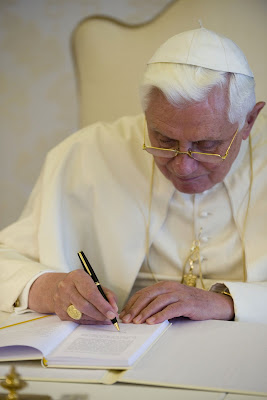
For the past few decades, distributists have mostly withdrawn from the purely economic debates to rest their case on moral and social claims. This is, of course, a necessary aspect of the problem. However, these claims cannot be made credible unless there is also a credible economic argument behind them. As Cardinal Ratzinger (as he then was) stated,

A morality that believes itself able to dispense with the technical knowledge of economic laws is not morality but moralism. As such it is the antithesis of morality. A scientific approach that believes itself capable of managing without an ethos misunderstands the reality of man. Therefore it is not scientific.

My intention in writing this book is to demonstrate that distributism is a robust economic theory, demonstrated by actual practice, and is capable of tackling the difficult and sophisticated problems that we face. I hope that this book will enable the distributist to enter the debate and stand his ground against all comers: socialist, capitalist, Austrian, Keynesian, or whatever.

This is the distributist moment. We must seize this moment; it will not come again. We must arm ourselves with both the moral and technical knowledge that will be required to reform our world and preserve our freedom. For make no mistake, although all these other answers have been tried and found wanting, there is yet another answer: slavery. Slave societies have proven themselves stable over long periods of time, and so provide a solution, no matter how distasteful to our Christian heritage, to the problems of social and economic stability. In the end, the question will be, as Belloc predicted it would, between freedom and slavery.

Read more...

Subsidiarity: Judging the Appropriate Level

The Distributist Review's own Paleocrat has posted a fascinating rumination on what subsidiarity really is. He convincingly argues that I, like many others, have been using the term rather imprecisely.

Oftentimes subsidiarity is described as the principle that the lowest possible level of society ought to be performing a given function. I myself have often defined it as such. It's understandable that many people think of it that way, given modernity's unquenchable penchant for harmful centralization. Indeed, Pope Pius XI's own formulation, in Quadragesimo Anno, was clearly concerned primarily with larger corporations eating up the functions of smaller, not the reverse. That saintly pope noted specifically that "it is an injustice, a grave evil and a disturbance of right order, for a larger and higher association to arrogate to itself functions which can be performed efficiently by smaller and lower societies," making no mention of usurpation the other way around. So it's only sensible that distributists likewise have traditionally concerned themselves more with over-centralization, rather than over-decentralization, though naturally both are problematic.

Furthermore, I think Paleocrat's "libertarian-leaning distributists" violate even this "smaller is always better" definition of subsidiarity, because they allow no real corporations between the state and the individual, meaning that the state is the only possible choice for any function the individual cannot himself perform. While they themselves will argue that private individuals can still get together and do things, rather than the state, the fact remains that any time one did not want domination by private individuals seeking private profit, one would be forced to resort to the state and to nothing else. What type of real subsidiarity is possible with such individualistic atomism?

Nevertheless, Paleocrat's argument is quite persuasive and, ultimately, correct; subsidiarity should be understood as saying not that the lowest possible level should be doing things, but that the right level should be doing them.

However, this does beg the question: how do we determine what the appropriate level of society is? I think the answer to this does depend, in part, on how high or low an order we're operating on. Many factors will play into our determination of what order of society is appropriate for what functions, and our conclusions will vary considerably depending on local circumstances. Still, here's a few of the considerations that I think are most important.

The nature of the task and the order in question. Obviously, what the task is, and what order we're looking at, will be pivotal in determining whether the task is appropriate to that order or some other. The best example of this is educating children. The nature of the task itself, and the nature of the family itself, make it quite clear that the family is the appropriate order for this task. (Of course, it's not always as simple as that; certain types of education are probably better done by other orders. But the general principle, I think, stands.)

The level of the order. While what Paleocrat calls "libertarian-leaning distributists" will probably balk at his conclusion, statist-leaning distributists will probably balk at what I'm about to say. However, the level of the order does have a good bit to say about whether it's the appropriate order for a given task.

Let's consider the education of children as another example, here in the United States. To assign this task to the federal government would be nothing short of ridiculous, and it would be ridiculous precisely because the federal government is too high an order for it. Education needs to be responsive to local needs; schools need to respond to local disciplinary problems; and so on. The federal government is just too high up, too large and broad-based, to effectively do the job.

On the other hand, the individual family is arguably too low-level to do all of it. The base of human knowledge is simply too broad even for two well-educated parents to teach their children completely on their own. My knowledge of calculus, dimly recalled from high school classes many years ago, just can't cut it; I'm going to need help teaching my children that.

So while "always let the lowest possible level do it" is certainly not an accurate application of subsidiarity, the level of the order in question is a vital consideration. A distributist need not be libertarian-leaning to assert that most functions currently performed at a high level of society ought to be done by one considerably lower.

The state itself is a corporation of last resort. The state exists in order to direct subsidiary corporations toward the common good. As such, it has a vital role to perform. The common libertarian notion of "our enemy, the state" is fundamentally antithetical to distributism, and to Catholic social thought in general. The state is not only our friend, but it's a good and necessary part of human society. As Aristotle rightly observed millennia ago, the man who can live rightly outside of the state must be either a beast or a god; he cannot be a man.

Catholic social teaching gives us the criteria for determining when the state needs to be involved:


[I]t is rightly contended that certain forms of property must be reserved to the State, since they carry with them an opportunity to domination too great to be left to private individuals without injury to the community at large.

Pius XI, Quadragesimo Anno. Clearly, the state has a role to play, but it's not one to be played lightly. The argument that Pius is supporting here is that the state is an appropriate agent when the "opportunity to domination is too great to be left to private individuals."

The military is an obvious example. Entrusting the defense of the realm to private individuals was tried in the Middle Ages, and worked reasonably well; unfortunately, it also resulted in frequent internecine warfare and armies difficult to direct to a single purpose for any considerable length of time. Our current system of entrusting national defense to the state is sensible and wise; even though the job could be done effectively by a lower level of society, it is done better and more appropriately by the state exclusively.

On the other hand, one could argue (and I would, personally) that entrusting personal defense entirely to the state would be deleterious. I work with the local police on a daily basis, and respect them immensely; they do an excellent job with overly limited resources and deserve our support. But they can't do everything. Permitting private citizens who have not otherwise forfeited their right to do so (for example, by conviction of a felony) to possess weapons for their own defense, and to use them for that purpose if necessary, is only sensible. Entrusting personal defense entirely to the state, forbidding lower corporations from defending themselves and owning the means necessary to do so, would be a violation of subsidiarity.

The reasoning behind not giving a task to the state if it's not necessary is the same as that behind giving it to the state if it is. That is, the "opportunity to domination" just isn't great enough to justify it. One must, of course, always consider this factor, even when the state is not in question; private corporations can dominate just as effectively as the state can. However, with the state the issue is much more relevant. The distributist need not be reminded about the benefits of private ownership; ownership and performance of a function by private---by which I mean simply non-governmental---organizations ought to be preferred, wherever possible, to that by state organizations.

As commentator Marchmain on Paleocrat's article remarked, Pope John XXIII in Mater et Magistra probably said it best:

It should be stated at the outset that in the economic order first place must be given to the personal initiative of private citizens working either as individuals or in association with each other in various ways for the furtherance of common interests.

The state when necessary; but only when really necessary. Non-state corporations are to be preferred whenever possible.

And that doesn't even begin to address what level of the state would be the appropriate actor, even once we've determined that the state must be the one to do it.

Obviously, many other factors will play into this analysis. Frequently there will be great room for overlap. Furthermore, the appropriate level for a task will vary considerably according to local conditions; for example, the state may be an appropriate provider of health care in one community but not in another. However, Paleocrat has given distributists a lot of food for thought with his recent posting, for which I, for one, am grateful. I'll be pondering this one for some time.

Praise be to Christ the King!

Creative Commons License
This work is licensed under a Creative Commons Attribution-Share Alike 3.0 United States License.

Read more...

Will the Real Subsdiarity Please Stand Up?

*italics are mine and only used for emphasis*

One difficulty facing those who take a borderline libertarian view of subsidiarity is that doing so fails to take into into account what encyclicals have said concerning the state, its proper role and functions, and particularly its rightful involvement in the market. This, as I have contended elsewhere, results in allowing the distributist tail to wag the CST dog.

It is my hope, then, to herein demonstrate what I believe to be a more accurate understanding of subsidiarity and how it should function alongside the powers and responsibilities belonging to various spheres of authority within the political economy, be it the individual, the family, the workforce, the church, or even local, regional, state, national, or international civil authorities.

Let me demonstrate what I mean.

We would do well to first consider the role of what the Magisterium has said concerning the State. For sake of time and space, as well as the fact that this particular encyclical is an excellent source for material pertaining to this matter, I will focus most all of my attention on the papal letter Mater et Magistra. I will also add a few tid-bits from the CCC and its Compendium, both of which substantiate and further clarify those issues dealt with by the popes in their universal letters.

Pope John XXIII was no foe of the state. As with Pope Leo XIII and all those pontiffs before and after him, he saw the state as being a authority deriving its power from God. He believed its existence to be most natural in the order of men. And as we will see, he believed the role and function of the state to be much more broad than many of the libertarian-leaning distributists.

Read Mater et Magistra, and search out those portions I will reference here. See what the pontiff says of the State. Consider whether or not this view of the state is in harmony with the position advocated by those whose definition of subsidiarity would make the State an almost non-existent entity.

Take for example #20-21. Here we are told that the State “whole raison d’etre” is the realization of the common good in the temporal order. Echoing the Leonine theme of the Church’s insistance that the State take special, and even preferential treatment of the poor and working class, he praises “labor laws” regarding environmental conditions of laborers, child labor laws, and anything harmful to their material and spiritual interests.

Number 44 requires the state to intervene on occasions where individuals cannot work out matters concerning the division and distribution of work.

Number 60 makes explicit the responsibility of the civil government in areas of healthcare, education, career opportunities, and even the rehabilitation of those who are physically and mentally handicapped.

We find in 74 the civil authorities responsibility to “secure without interruption” the material conditions in which the citizens of the nation may fully develop. Number 79 goes further, indicating that the state is to be vigilant over and within the economy, assuring that work will be maximized amongst the citizenry, that privileged classes would not be permitted to rise up, that there would be an equilibrium amongst wages and the price of goods, that both goods and services would be accessible to the greatest number, and that the three branches of the economy (i.e. agriculture, industry, and service) would be regulated in such a manner as to ensure that they will grow together rather than for any of them to be absorbed with the dominance of any other. To top it off, the civil government was to have the authority necessary to direct the current contract system that divides capitalists from wage-earners to one resembling a partnership.

We could also deal with #s 104 (regulating Big Business so as to operate in a manner promoting the common good over against special interests), 115 (putting in place an economic system wherein the distribution of wealth, land, houses, tools and equipment used by various industries, and shares in medium and large business concerns would all be maximized), 116 (granting to the state various activities that “carry with them power too great” to be left to lower orders), 88 and 127 (dealing with state involvement in ventures such as roads, transportation, communication, drinking water, housing, healthcare and service providers, technical and professional education, religious and recreational facilities, and subsidies for family farms), 150-151 (demanding vigilant care as to the further elimination of economic and social inequalities and imbalances, the supply of labor, drif of population, wages, taxes, credit, investment, and the promotion of useful employment, enterprising initiative, and hte exploitation of local resources), and 168 (the redistribution of riches amongst all within the community and working towards ensuring that agriculture, service, and industry progress evenly and simultaneously). The list goes on an on.

For anyone to walk away from even this one encyclical with the idea that it proposes the kind of “lowest rung possible” subsidiarity regarding virtually every economic activity under the sun would be a sure indicator that they either didn’t really read the encyclical or they have a terrible case of selective memory.

But what of those places that deal with subsidiarity? We have discussed at some length the role and proper functions of the state, but what then are we to make of this principle of subsidiarity? Well, let’s go back to Mater et Magistra for a moment.

Number 53 within Mater et Magistra sounds much like the version of subsidiarity commonly promoted by those harboring a general distrust (or disdain) for civil government. But it would be injurious to tear it from its surrounding context. For number 53 is surrounded by affirmations that make absurd the notion that the pope(s) have promoted this “lowest rung possible in any and all situations” subsidiarity. Looking at #52, we see Pope John XXIII explicitly stating that “the civil power must also have a hand in the economy.” And this intervention is not merely an afterthought, or functioning as a clean-up watchman waiting for an otherwise private market to make a mistake. No, it is to “promote production” in a way that is “calculated” and has as its aim “social progress and the well-being of all citizens.” Remember, this is what immediately precedes the popes take on subsidiarity.

Following #53 we see the pope go right back into promoting state intervention and direction of the economy. In #54 he affirms the state’s obligation to minimize imbalances amongst various sectors within the economy, to implement policies that do not pit one people, region, or nation against another, and to erect safeguards against mass unemployment and fluctuations within the economy. Again, this follows on the heels of the section dealing with subsidiarity.

The pope further deals with subsidiarity in #117, but he presupposes what had already been established by other popes regarding the various spheres of authority within the political economy as well as the rights and responsibilities belonging to each. The civil government (as with the individual, family, the marketplace, and the church) had been assigned various functions. These were always to be kept in view when talking of subsidiarity, as it would be just as wrong for a lower sphere to take upon itself what rightfully belongs to a higher sphere as it would for the higher sphere to deprive or absorb those responsibilities properly acknowledged as belonging to a lower sphere. While libertarians may tend to see only a higher sphere absorbing a lower sphere as a form of aggression, the traditionalist and encyclical enthusiast would do well to see it as a two-way street.

While one could possibly construct a way that a specific function assigned to a particular sphere may be done by another sphere, be it replacing the function of the individual or family with the state or vice versa, this would not constitute subsidiarity. Rather, it would be for one sphere to break ranks, absorbing what does not belong to it. In short, even subsidiarity works in a manner that accepts the rightful authority and functions of other spheres within the political economy, be they higher or lower, belonging to the state or the individual.

Let us just for a moment take a peak at the encyclical known as Quadragesimo Anno. It is here where we find the birthplace of subsidiarity in Catholic Social Teaching. Yet even here we see civil and church authorities granting special care for the poor and weak in society (#25), the praise of labor laws (#28), the redistribution of wealth for the common good (#57), requiring the state to work towards establishing an “ownership society” (#82-83), the condemnation of laissez faire (#88 and #109), and even demanding that the state take hold of the reigns of the “free market” in order to direct it towards the common good (#110).

None of this sounds unfamiliar to those holding a position concerning subsidiarity and the state detailed ever so consistently in the papal letters. But it would sound awfully strange to those granting to subsidiarity a function and reach it was never meant to have, nor ever recognized by our most highly esteemed Roman Pontiffs as ever having in the first place.

Before bringing this entry to an end, I believe it would do us well to look at what the Catechism of the Catholic Church (CCC) and Compendium have to say regarding the definition of subsidiarity. I believe that these two sources, and the definition they provide the Catholic, vindicate the premise of this entry, as well as the arguments used to substantiate it.

CCC 1883: Subsidiarity: according to which “a community of a higher order should not interfere in the internal life of a community of a lower order, depriving the latter of its functions, but rather should support it in case of need and help to co-ordinate its activity with the activities of the rest of society, always with a view of a the common good.”

Compendium: 403: Subsidiarity: “The principle of subsidiarity states that a community of higher order should not assume the task belonging to a community of a lower order and deprive it of its authority. It should rather support it in case of need.”

Notice that both the CCC and Compendium make it very clear that subsidiarity does not mean that if one were to concoct a means by which a lower order could perform a task as good (or even better) than the order to which the function belongs, then it should absorb that function. Not at all!

In conclusion, each order, each sphere within society, is given various tasks it must or ought to perform. Sometimes these are clear-cut. Sometimes they overlap. Sometimes we are left with a great deal of gray. But subsidiarity must not be understood as some libertarian wishbone. Instead, it is restricted to the overlapping areas and those gray regions. Unfortunately for the libertarian-leaning distributist, this turns out being more of a bust than a boom, as so many of their policy proposals stand or fall on an accurate understaning of subsidiarity.

Read more...

The Mixed Blessing: Caritas in Veritate, Part III

The Pope also turns his attention to new challenges, challenges which he addresses rigorously from the standpoint of Catholic social teaching.

The one most pertinent to the modern world is the issue of the environment. He notes that "[t]oday the subject of development is also closely related to the duties arising from our relationship to the natural environment."[1] However, the Pope's care for the environment is not one of valuing nature for nature's sake, nor one of promoting the good of nature above that of man. Rather, it is based firmly in man's duty, as expounded in the Sacred Scriptures, to care for the earth, a duty that is frequently called Christian stewardship.

In other words, the environment exists for man, not man for the environment; as such, it becomes even more important to ensure that it is well cared for and protected:


The environment is God's gift to everyone, and in our use of it we have a responsibility towards the poor, towards future generations and towards humanity as a whole. When nature, including the human being, is viewed as the result of mere chance or evolutionary determinism, our sense of responsibility wanes. In nature, the believer recognizes the wonderful result of God's creative activity, which we may use responsibly to satisfy our legitimate needs, material or otherwise, while respecting the intrinsic balance of creation. If this vision is lost, we end up either considering nature an untouchable taboo or, on the contrary, abusing it. Neither attitude is consonant with the Christian vision of nature as the fruit of God's creation.[2]

Surely, St. Thomas Aquinas would have been hard pressed to have said it better. Both ways---that of giving nature too much value and that of giving it too little---are fraught with danger. The Pope teaches that "it should also be stressed that it is contrary to authentic development to view nature as something more important than the human person. This position leads to attitudes of neo-paganism or a new pantheism."[3] Which is, of course, precisely where it has led. On the other hand, viewing nature as irrelevant, subject to any whim of man, is also dangerous, because it neglects the order which God put into nature for man to use, not to abuse:

[I]t is also necessary to reject the opposite position, which aims at total technical dominion over nature, because the natural environment is more than raw material to be manipulated at our pleasure; it is a wondrous work of the Creator containing a 'grammar' which sets forth ends and criteria for its wise use, not its reckless exploitation.[4]

Both the environmentalists and the anti-environmentalists are, the Pope teaches, wrong. The environment exists for the service of man; as such, man is entitled to use it as he sees fit. However, nature also contains an order which must not be violated, even on the pretext of serving man.

In this vein, the depletion of natural resources also falls under the Pope's gaze. Personally, I'm not sure I concur with the so-called "Peak Oil" theorists; however, the fact is that many natural resources are limited in nature, and the Pope addresses such resources in a reasonable and thoughtful way.

It is likewise incumbent upon the competent authorities to make every effort to ensure that the economic and social costs of using up shared environmental resources are recognized with transparency and fully borne by those who incur them, not by other peoples or future generations.[5]

This is nothing more than a straightforward application of traditional principles of distributive justice. He who reaps the benefits must pay the cost. An excellent example is a collapsing fishery, which is generally utilized by many countries. A country which consumes the bulk of the produce of this hypothetical fishery ought to pay the costs of its collapse, given that that collapse is primarily due to its own overfishing. However, frequently not only the overfishing country, but also all other countries who use the fishery, no matter how responsibly, suffer from its collapse. This is unjust. The Pope teaches here that we must ensure that when a natural resource is depleted, countries should bear the costs of that depletion in proportion to the benefits they've derived from it. Similarly, we have no right to use up all our resources without providing for future generations in some way.

How can we ensure that nature is protected and utilized properly, and that natural resources are justly distributed? The Pope speaks to that question, too. While some of what he writes is entangled in what both distributists and others have found to be an objectionable internationalism (for which see the upcoming Part IV), he makes another observation about solving these difficult problems which distributists and Catholics should find inspiring:

In order to protect nature, it is not enough to intervene with economic incentives or deterrents; not even an apposite education is sufficient. These are important steps, but the decisive issue is the overall moral tenor of society. If there is a lack of respect for the right to life and to a natural death, if human conception, gestation and birth are made artificial, if human embryos are sacrificed to research, the conscience of society ends up losing the concept of human ecology and, along with it, that of environmental ecology.[6]

If we do not respect human life and the order of human society, it is unsurprising that we do not respect anything else in the natural order. No economic policy, no matter how wise, will rectify this. We need to respect the order of creation first of all in ourselves; only then will we respect it in everything else.

His Holiness also speaks against what he calls "relativistic education," which is a great force preventing true development of peoples. While education has been on a decline for decades, its relativism is now so explicit and so widespread that the Pope's treatment of it must qualify as addressing a new problem.

The increasing prominence of a relativistic understanding of that nature presents serious problems for education, especially moral education, jeopardizing its universal extension. Yielding to this kind of relativism makes everyone poorer and has a negative impact on the effectiveness of aid to the most needy populations, who lack not only economic and technical means, but also educational methods and resources to assist people in realizing their full human potential.[7]

We educate people to be good at things, but not simply to be good. Education in both developing and developed countries now teaches only techniques, not truth. But without a good foundation in truth, the economic and social realities cannot change.

Another new circumstance, largely unknown at the time of most of the previous great social encyclicals, is tourism. The Pope addresses tourism as an "industry" at some length, noting that it "can be a major factor in economic development and cultural growth."[8] However, he also argues persuasively that it "can also become an occasion for exploitation and moral degradation."[9] One's mind is immediately brought to so-called "sexual tourism" in places like parts of Southeast Asia, in which the locality and its inhabitants are treated as tools for richer countries' enjoyment, a situation tolerated and even embraced by local communities because there is no other way for them to bring in this extra coin. This, of course, is one of the extreme cases; however, the Pope has strong words for tourism even as practiced in less drastically exploitative circumstances:

Even in less extreme cases, international tourism often follows a consumerist and hedonistic pattern, as a form of escapism planned in a manner typical of the countries of origin, and therefore not conducive to authentic encounter between persons and cultures.[10]

Now, one's mind is immediately brought to trips to Mexico by thousands of drunken, drug-besotten teenagers for "spring break" (formerly called "Easter vacation," though given that it's currently given over entirely to debauchery it is perhaps good that it no longer takes its name from that most sacred of holidays).

The Pope does not, of course, condemn tourism entirely. Some tourism does, in fact, have "the ability to promote genuine mutual understanding, without taking away from the element of rest and healthy recreation."[11] This type of tourism ought to be promoted, and the others discouraged. The precise means for doing so, of course, is up to the localities which depend on such tourism for their livelihoods.

The distributist answer, of course, is to rely on something else for one's livelihood. A locality relying on the wealth and spending habits of an entirely separate population for its economic health is a clear violation of subsidiarity. While tourism can be a part of a healthy economy, it ought not be the majority of it. For tourist locations, as everywhere, the sources of real wealth are the fields, the forests, the factories, and the mines; tourism certainly isn't productive, and therefore while it is not bad in itself, is not an appropriate driver for economic development.

Finally, the Pope addresses another industry that has arisen in recent decades: that of psychiatry. While it's clear that psychiatry and psychology are legitimate fields with real value---the Pope steers well clear of a Scientological condemnation of all psychology---it's equally clear that our society overvalues them and relies on them in an inappropriate way:

One aspect of the contemporary technological mindset is the tendency to consider the problems and emotions of the interior life from a purely psychological point of view, even to the point of neurological reductionism. In this way man's interiority is emptied of its meaning and gradually our awareness of the human soul's ontological depths, as probed by the saints, is lost.[12]

Depression, failure to pay attention, failure to behave, failure to avoid criminal activity---none of these are considered as indicators of bad behavior, bad spiritual formation, or even bad judgment. Too often, these and other behaviors and conditions are seen solely as the result of disordered psychology, due primarily to a chemical imbalance in the brain. This is the "neurological reductionism" to which the Pope objects. The Pope teaches that

[s]ocial and psychological alienation and the many neuroses that afflict affluent societies are attributable in part to spiritual factors. A prosperous society, highly developed in material terms but weighing heavily on the soul, is not of itself conducive to authentic development.[13]

Yet because our society has become so reductionist, equating accumulation of money with economic health and economic with societal health, we are unable to recognize this fact. Ironically, this emphasis on psychological causes---"neurological reductionism"---prevents us from ensuring the psychological health of our people. This is because "[d]evelopment must include not just material growth"---this includes the neuroses that psychology too often explains as mere physical issues---"but also spiritual growth."[14]

The Pope has addressed these new concerns in a way deeply consonant with past Catholic social teaching, faithful to his teaching that "the Tradition of the apostolic faith . . . [is] a patrimony both ancient and new."[15] Some limited aspects of this encyclical, however, gives the distributist some pause and discomfort. That will be the subject of the next part.

Praise be to Christ the King!

1. Benedict XVI, Caritas in Veritate, no. 48.
2. Id.
3. Id.
4. Id.
5. Benedict XVI, Caritas in Veritate, no. 50.
6. Benedict XVI, Caritas in Veritate, no. 51.
7. Benedict XVI, Caritas in Veritate, no. 61.
8. Id.
9. Id.
10. Id.
11. Id.
12. Benedict XVI, Caritas in Veritate, no. 76.
13. Id.
14. Id.
15. Benedict XVI, Caritas in Veritate, no. 10.

Creative Commons License
This work is licensed under a Creative Commons Attribution-Share Alike 3.0 United States License.

Read more...

The Mixed Blessing: Caritas in Veritate, Part II

This encyclical contains much to give the Catholic heart, devoted to Catholic social teaching, immense joy. Pope Benedict XVI states clearly and unequivocally a number of propositions that make those dedicated to Catholic social teaching very happy, and others very unhappy.

The Pope states first and foremost the basis for all of the Church's social teaching, a basis which one could easily derive from the title of the document: charity. "Charity," the Pope declares, "is at the heart of the Church's social doctrine."[1] Not some cold, detached vision of an economic "science"; not some abstract notion of the inevitable progress of history; charity, pure and simple. In so saying, the Pope clearly and explicitly distances Catholic social teaching from capitalism and socialism in all their many forms. When the Church thinks about economics and other social matters, her primary concern is not efficiency, liberty, or any of the buzzwords of materialistic economic thinking. It is charity, pure and simple.

Furthermore, since the Church's social teaching is based fundamentally on charity, the Pope reaffirms what the Church has always taught: that economic and political matters are unquestionably within the jurisdiction of the Church. The first of the great economically-focused social encyclicals, Leo XIII's Rerum Novarum, thought the subject so obviously within the Church's purview that he asserted her authority over it with little argument:


We approach the subject with confidence and surely by Our right... [because] the question under consideration is certainly one for which no satisfactory solution will be found unless religion and the Church have been called upon to aid.[2]

Pius XI clearly reaffirmed the Church's authority in such matters, stating that "both social and economic questions [must] be brought within Our supreme jurisdiction,"[3] and John Paul II went so far as to teach that the Church's social doctrine "is an essential part of the Christian message."[4] While some have managed, even when confronted with all these pronouncements, to continue to deny with a straight face that the Church has authority in the economic realm, Pope Benedict's clear statement provides additional support for that clearly correct proposition.

Of course, His Holiness makes it very clear that he is offering only principles of social thought, not specific and technical solutions. "The Church does not have technical solutions to offer. . . She does, however, have a mission of truth to accomplish, in every time and circumstance, for a society that is attuned to man, to his dignity, to his vocation."[5] However, the Church's obligation to present this social teaching, and her authority within this realm, he defends with every bit of the strength of his predecessors, proclaiming that the Church's "social doctrine is a particular dimension of this proclamation [of Christ]: it is a service to the truth which sets us free."[6]

The Pope also argues that the Church's social doctrine is not really separable from Christianity.[7] He argues that "adhering to the values of Christianity is not merely useful but essential for building a good society and for true integral human development."[8] While some later statements in the encyclical make this statement questionable, in principle, here if not elsewhere, the Pope reaffirms the necessity of acknowledging Christ the King in any truly just social order.

The Pope then proceeds to identify two absolutely essential linchpins of Catholic social thought: justice and the common good. While His Holiness never defines justice, a regrettable omission to be sure, it is clear from his treatment of it that he accepts the traditional definition; namely, giving to each what is his due. This, in particular, is distributive justice, that specific type of justice from which distributism takes its name. The Pope observes that charity, which he'd previously identified as the root of Catholic social teaching, goes beyond justice; however, he further observes that justice is the minimum required by charity.[9] Justice being the minimum of charity, it's clear that meeting the requirements of justice is absolutely necessary for an economic system to conform to Catholic social teaching.

Next is the common good, a concept thoroughly rooted in Catholic social teaching and much abused by modern philosophers. The "common good," His Holiness teaches, is "a good that is linked to living in society."[10] It is not merely the good of each individual living in society; it includes individuals, families, and all subsidiary corporations, including the workingmen's associations which he addresses much later on in the encyclical. "It is the good of 'all of us', made up of individuals, families and intermediate groups who together constitute society."[11] His Holiness proceeds even further, sounding almost Aristotelian on the subject:

[F]or the people who belong to the social community . . . [they] can only really and effectively pursue their good within it. To desire the common good and strive towards it is a requirement of justice and charity. . . . This is the institutional path --- we might also call it the political path --- of charity, no less excellent and effective than the kind of charity which encounters the neighbor directly, outside the institutional mediation of the polis.[12]

In other words, seeking the common good is nothing other than seeking charity on a political level. It is not, as so many modern thinkers will have it, merely seeking the greatest good for the greatest number; it is specifically ensuring justice within society---namely, that everyone receives what is his due---which itself includes charity, which goes beyond justice in seeking the good of everyone, including families and other corporations subsidiary to the state. Outside of the society, His Holiness teaches, man cannot effectively pursue his good; it is necessary, therefore, that society be geared toward assisting him toward that end.

And therein, of course, lies the crux of his disagreement with so many worldly economists and other social thinkers: His Holiness believes, and unabashedly proclaims, that society must be designed around the entirety of man, not merely his material well-being. He says so quite explicitly:

[A]uthentic human development concerns the whole of the person in every single dimension. Without the perspective of eternal life, human progress in this world is denied breathing-space. Enclosed within history, it runs the risk of being reduced to the mere accumulation of wealth; humanity thus loses the courage to be at the service of higher goods, at the service of the great and disinterested initiatives called forth by universal charity.[13]

One can already hear the vehement protests from "Austrians" and all other stripes of modern thinkers. What do you mean, human development needs to include "the perspective of eternal life" or "it runs the risk of being reduced to the mere accumulation of wealth"? Economics is all about the mere accumulation of wealth! The Pope, of course, disagrees.

[P]rogress of a merely economic and technological kind is insufficient. Development needs above all to be true and integral. The mere fact of emerging from economic backwardness, though positive in itself, does not resolve the complex issues of human advancement.[14]

Catholic social teaching is after more than merely helping people get microwaves and flat-screen televisions; it's after achieving justice and the common good and motivated by charity. That's what separates it from modern social thinking, and that's what makes modern thinkers despise it.

Human development (by which he means social and economic improvement, among other things, as he explains in some detail in no. 21) isn't just about getting more material stuff; it's about assisting real, living human persons toward their salvation, their "eternal life." That is why justice and the common good are the cornerstones of Catholic social thought; that is why charity is the viewpoint through which all social efforts must be analyzed; and that is why modern economists of all varieties hate Catholic social teaching and hate this encyclical. In this respect, it reaffirms the constant and perennial social teaching of the Catholic Church; as such, it is their enemy, but the distributist's friend.

On more particular matters, His Holiness says many things that makes the distributist's heart rejoice. He observes, for example, that technological progress is not a good in itself; rather, it requires analysis and circumspection.

Paul VI had already warned against the technocratic ideology so prevalent today, fully aware of the great danger of entrusting the entire process of development to technology alone, because in that way it would lack direction. Technology, viewed in itself, is ambivalent.[15]

So when modern economists tell us not to worry about the constant hemorrhaging of traditional jobs in agriculture and manufacturing because new jobs in computers and other new industries which Americans can do "more efficiently" will inevitably take their place, distributists have some further support for their skepticism.

The Pope further opposes the "Austrian" economists' favorite idol, the profit motive, when considered as an end in itself. In these cases, the profit motive only furthers poverty and worsens the lot of the poor. "Profit," His Holiness states, "is useful if it serves as a means towards an end that provides a sense both of how to produce it and how to make good use of it. Once profit becomes the exclusive goal, if it is produced by improper means and without the common good as its ultimate end, it risks destroying wealth and creating poverty."[16] In other words, when profit is sought for the common good, with due regard for its just distribution, it is good; however, when profit is sought without regard for these considerations and solely for some private good, it ceases to be helpful. The desire for profit must have "the common good as its ultimate end"; otherwise, it is untethered from its purpose, and like anything else so untethered will run amuck to society's disadvantage.

The Pope further laments "the damaging effects on the real economy of badly managed and largely speculative financial dealing."[17] Distributists, who advocate a return of the real economy to primacy, will appreciate his words on this subject. Finance, he continues, "needs to go back to being an instrument directed towards improved wealth creation and development."[18] It needs to be responsible finance, at the service of the real economy, not an independent economy on its own. The financial sector requires not only an internal conscience, but also external regulation to be appropriately directed toward the common good:

Both the regulation of the financial sector, so as to safeguard weaker parties and discourage scandalous speculation, and experimentation with new forms of finance, designed to support development projects, are positive experiences that should be further explored and encouraged, highlighting the responsibility of the investor.[19]

Whatever the particular form of the financial sector, usury must be avoided, and the poor and weak must be provided with means to protect themselves against it.[20] The condemnation of usury here is a welcome addition to the encyclical.

Further along these lines, Pope Benedict follows his predecessors in discussing the free market, and approving of it only in a limited way. He notes that the economy in general involves moral, not value-neutral, choices:

[T]he conviction that the economy must be autonomous, that it must be shielded from "influences" of a moral character, has led man to abuse the economic process in a thoroughly destructive way. In the long term, these convictions have led to economic, social and political systems that trample upon personal and social freedom, and are therefore unable to deliver the justice that they promise.[21]

The Pope then proceeds to acknowledge that free markets in particular do offer some advantages, but notes that this approving verdict, which after all only echoes prior decisions in past encyclicals,[22] is not unconditional:

Economic activity cannot solve all social problems through the simple application of commercial logic. This needs to be directed towards the pursuit of the common good, for which the political community in particular must also take responsibility. Therefore, it must be borne in mind that grave imbalances are produced when economic action, conceived merely as an engine for wealth creation, is detached from political action, conceived as a means for pursuing justice through redistribution.[23]

In other words, free markets are wonderful, provided that they are subordinated to the pursuit of the common good. They are not a goal in themselves, nor are they the "value-free" means of guaranteeing efficient production that capitalists often tout them to be:

It must be remembered that the market does not exist in the pure state. It is shaped by the cultural configurations which define it and give it direction. Economy and finance, as instruments, can be used badly when those at the helm are motivated by purely selfish ends.[24]

Markets are not and cannot be value-free. They are good when used properly; they are disastrous when not directed by the political system toward the common good. The encyclical makes its approval of markets very clearly conditional upon them being "structured and governed in an ethical manner."[25]

Finally, the Pope speaks at some length on the proper role of the state in the economy. Now, Popes have long held that the state has an important and active role in a well-ordered economy, specifically in ensuring that all the private interests in the state, whether of individuals or of subsidiary corporations, are directed overall to the common good. Pius XI explained it this way:

It follows from the twofold character of ownership, which We have termed individual and social, that men must take into account in this matter, not only their own advantage, but also the common good. To define in detail these duties, when the need occurs and when the natural law does not do so, is the function of the government.[26]

This was extended by John Paul II, who even spoke approvingly, as a prudential matter, of the welfare state in this regard,[27] though he also identified its problems, ascribing them mainly to a neglect of the principle of subsidiarity.[28] His Holiness Pope Benedict takes up this question again, and provides a great deal of food for distributist thought in the process.

In the first place, the necessity and goodness of state involvement in the economy is taken for granted; Pope Benedict does not defend the proposition, nor does he need to, since the question had already been settled beyond question at least as early as Rerum Novarum.[29] However, His Holiness makes quite clear that current modes of state involvement need to be reconsidered:

[A]s we take to heart the lessons of the current economic crisis, which sees the State's public authorities directly involved in correcting errors and malfunctions, it seems more realistic to re-evaluate their role and their powers, which need to be prudently reviewed and remodelled so as to enable them, perhaps through new forms of engagement, to address the challenges of today's world.[30]

This, however, is a practical question, not a theoretical question about whether government involvement is necessary at all. Such involvement is clearly necessary, part of the proper role of government, even if its current role needs to be rethought.

Specific involvement that needs to be reconsidered is the government's role in outsourcing and its relations to trade unions. Outsourcing of jobs to cheaper labor markets has resulted in governments competing for foreign investment by setting up "favourable fiscal regimes and deregulation of the labour market."[31] This, the Pope observes, has had "consequent grave danger for the rights of workers, [and] for fundamental human rights."[32] Furthermore, "trade union organizations experience greater difficulty in carrying out their task of representing the interests of workers, partly because Governments, for reasons of economic utility, often limit the freedom or the negotiating capacity of labour unions."[33] This last is perhaps the worst of all the effects of this competition for worker exploitation, because it violates what has been one of the most consistent prescriptions of the Church for the world's economic ills, the need for workmen's associations:

The repeated calls issued within the Church's social doctrine . . . for the promotion of workers' associations that can defend their rights must therefore be honoured today even more than in the past, as a prompt and far-sighted response to the urgent need for new forms of cooperation at the international level, as well as the local level.[34]

The loss of worker's rights, along with the increasing mobility of labor that deregulation has facilitated, have made the formation of stable families more difficult, as well. It has also resulted in comparatively uncertain and unsteady employment for many workers, which leads to "[b]eing out of work or dependent on public or private assistance for a prolonged period," which in turns causes "great psychological and spiritual suffering."[35] All in all, the entire situation---the competition among nations to set up environments most exploitative of the worker being the root issue---requires serious reform, a reform that distributism, founded as it is upon producing stable and independent workers, is well-suited to undertake.

Finally, though papal encyclicals have often focused on the industrial worker (not neglecting their agricultural brethren), Pope Benedict keeps agriculture and the farmer in their proper place, as an equal partner to the factories in the production of wealth. His words for the agricultural situation are stern. Agricultural needs reform, and that reform

needs to be accomplished with the involvement of local communities in choices and decisions that affect the use of agricultural land. In this perspective, it could be useful to consider the new possibilities that are opening up through proper use of traditional as well as innovative farming techniques, always assuming that these have been judged, after sufficient testing, to be appropriate, respectful of the environment and attentive to the needs of the most deprived peoples. At the same time, the question of equitable agrarian reform in developing countries should not be ignored.[36]

Pope Benedict wisely refuses to get involved in the many disputes about modern agricultural practices---chemical as opposed to organic, large-scale as opposed to small-scale, and so on---and simply notes general principles; namely, that traditional methods should be remembered, but that new techniques should not be neglected, and most of all that subsidiarity must be respected. The Pope's adamant insistence on the involvement of local communities, rather than top-down reform, is a thoroughly distributist aspect of his teaching; indeed, at one point he even declares that localism is an appropriate standard for determining good investments,[37] a striking endorsement of the subsidiarity that his predecessors have always strongly supported.

Many other constant themes of distributist thought appear in and are defended by this encyclical. His Holiness specifically defends the concept of the just wage, for example, stating that poverty often arises in societies "because a low value is put on work and the rights that flow from it, especially the right to a just wage and to the personal security of the worker and his or her family."[38] He further supports the concept of workmen's associations, as already noted above, with some specificity, though he refers specifically to labor unions, which are probably not the notion that Leo XIII and Pius XI were explicating. The Pope praises workmen's associations for "their necessary activity of defending and promoting labour, especially on behalf of exploited and unrepresented workers, whose woeful condition is often ignored by the distracted eye of society."[39] He also argues forcefully for taking into account local cultures when trying to aid them economically.[40]

The Pope further warns against the overextension of welfare policies; if solidarity---which in this case means social assistance programs---fail to take into account subsidiarity, or vice versa, it will descend into "paternalistic social assistance" or "social privatism."[41] Too much social assistance, or social assistance done badly, "can sometimes lock people into a state of dependence and even foster situations of localized oppression and exploitation in the receiving country."[42] (Here the Pope applies this specifically to foreign aid, but the argument is easily applicable to domestic assistance, as well.) One can recognize Belloc's warnings about the welfare state in the Pope's concerns here.

Finally, the Pope brings up modernity's worst violation of proper social principles, its consistent violation of the principles of life. "Openness to life," the Pope teaches, "is at the centre of true development."[43] Only a respect for life will allow societies to "promote virtuous action within the perspective of production that is morally sound and marked by solidarity, respecting the fundamental right to life of every people and every individual."[44] Yet states continue to permit or compel violations of life, often justified by trumped-up concerns of population growth. "Against such policies, there is a need to defend the primary competence of the family in the area of sexuality."[45] In other words, until our society defends the family and abandons abortion, contraception, euthanasia, and its many other offenses against life, true development---the implementation of Catholic social teaching---is impossible.

Space does not permit a complete exposition of the many good aspects of this encyclical. Pope Benedict offers a great deal of new insight and wisdom to Catholic social teaching, insight and wisdom which reinforces the principles that distributism has derived from past encyclicals and advocated for over a century. The reader is encouraged to read the encyclical itself to see some of these; the author also intends to update his own Distributism: A Catholic System of Economics to reflect them. It will take many years for the depths of this encyclical to be fully plumbed, and all distributists, not to mention all Catholics, should be grateful to the Pope for his insight.

Pope Benedict's insight is not limited, however, to reaffirming and reapplying the teachings of his predecessors. It includes some responses to new economic challenges, responses which the Pope formulated by relying firmly on traditional Catholic social principles. To these insights I will now turn my attention.

Footnotes for Part I:

1. Benedict XVI, Caritas in Veritate, no. 2.
2. Leo XIII, Rerum Novarum, no. 24.
3. Pius XI, Quadragesimo Anno.
4. John Paul II, Centesimus Annus, no. 5.
5. Benedict XVI, Caritas in Veritate, no. 9.
6. Id.
7. But the encyclical is ambiguous on this question. See Part IV of this series.
8. Benedict XVI, Caritas in Veritate, no. 4.
9. Benedict XVI, Caritas in Veritate, no. 6.
10. Benedict XVI, Caritas in Veritate, no. 7.
11. Id.
12. Id.
13. Benedict XVI, Caritas in Veritate, no. 11.
14. Benedict XVI, Caritas in Veritate, no. 23.
15. Benedict XVI, Caritas in Veritate, no. 14.
16. Benedict XVI, Caritas in Veritate, no. 21.
17. Id.
18. Benedict XVI, Caritas in Veritate, no. 65.
19. Id.
20. Id.
21. Id., no. 34.
22. John Paul II, for example, noted that the market "[seems to be] the most efficient instrument for utilizing resources and effectively responding to needs. But this is true only for those needs which are 'solvent,' insofar as they are endowed with purchasing power, and for those resources which are 'marketable,' insofar as they are capable of obtaining a satisfactory price." Centestimus Annus, no. 34.
23. Benedict XVI, Caritas in Veritate, no. 36.
24. Id., no. 36.
25. Id.
26. Pius XI, Quadragesimo Anno.
27. John Paul II, Centestimus Annus, no. 48 (he refers to it as the "Social Assistance State").
28. Id.
29. Leo XIII, Rerum Novarum, no. 52 (stating that individuals only have freedom to use their possessions as they will "so far as this is possible without jeopardizing the common good and without injuring anyone").
30. Benedict XVI, Caritas in Veritate, no. 24.
31. Id.
32. Id.
33. Id.
34. Id.
35. Id.
36. Id., no. 27.
37. Id., no. 40.
38. Id., no. 63.
39. Id., no. 64.
40. Id., no. 59.
41. Id., no. 58.
42. Id.
43. Id., no. 28.
44. Id.
45. Id., no. 44.

Praise be to Christ the King!

Creative Commons License
This work is licensed under a Creative Commons Attribution-Share Alike 3.0 United States License.

Read more...

  © Blogger template Werd by Ourblogtemplates.com 2009

Back to TOP